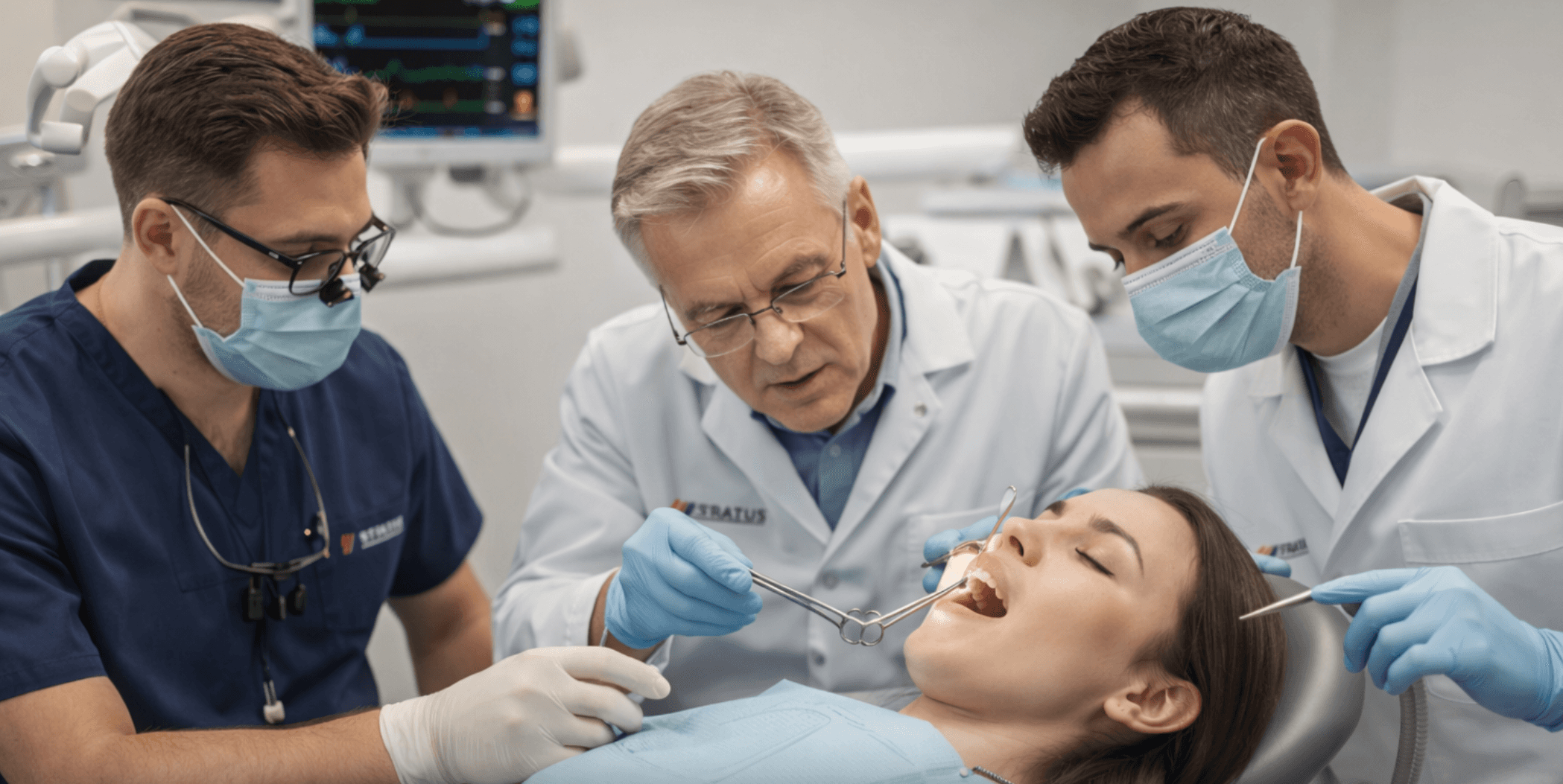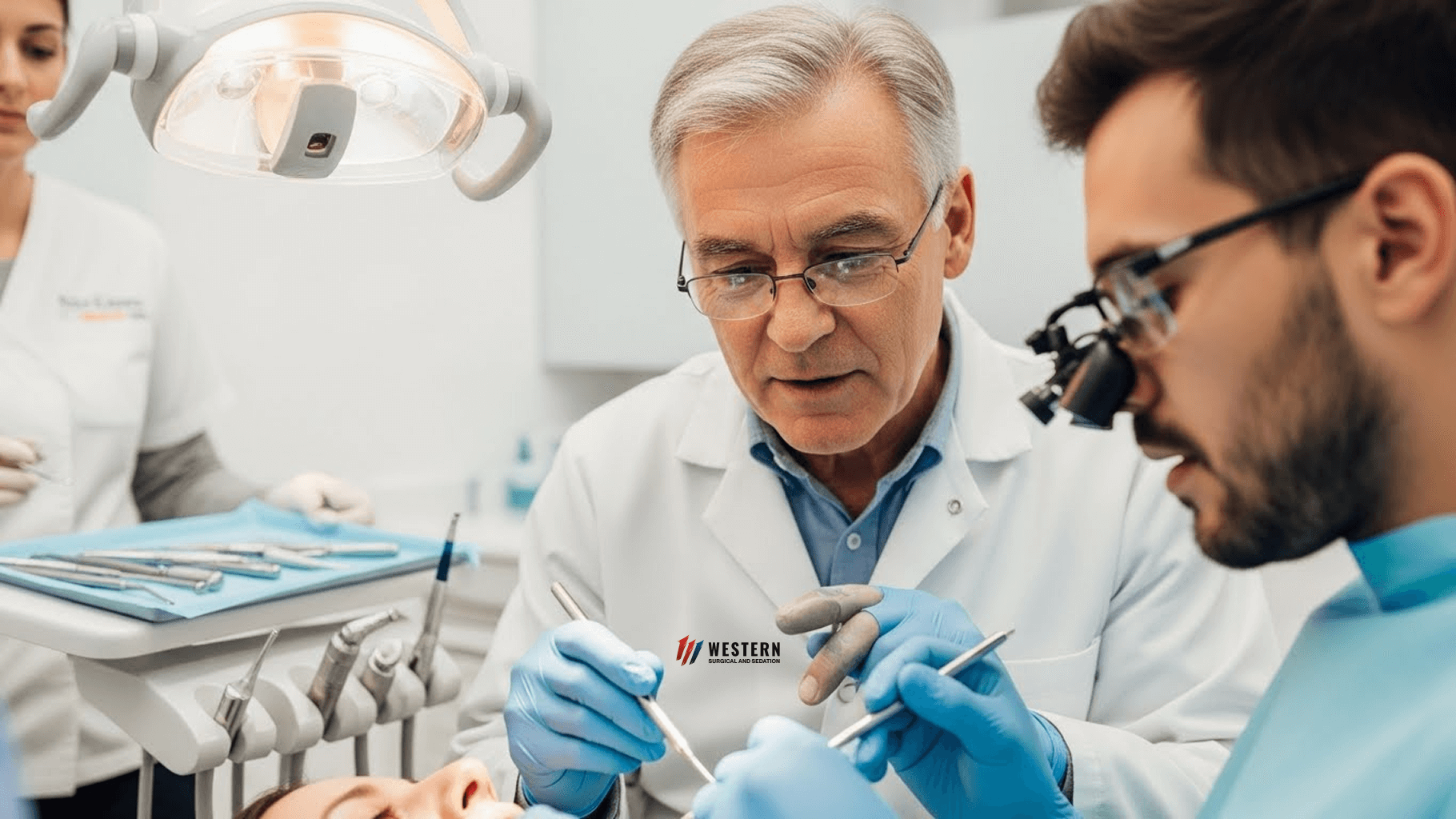
Third Molar Extractions: How General Dentists Move From Complexity to Control
Surgical Training
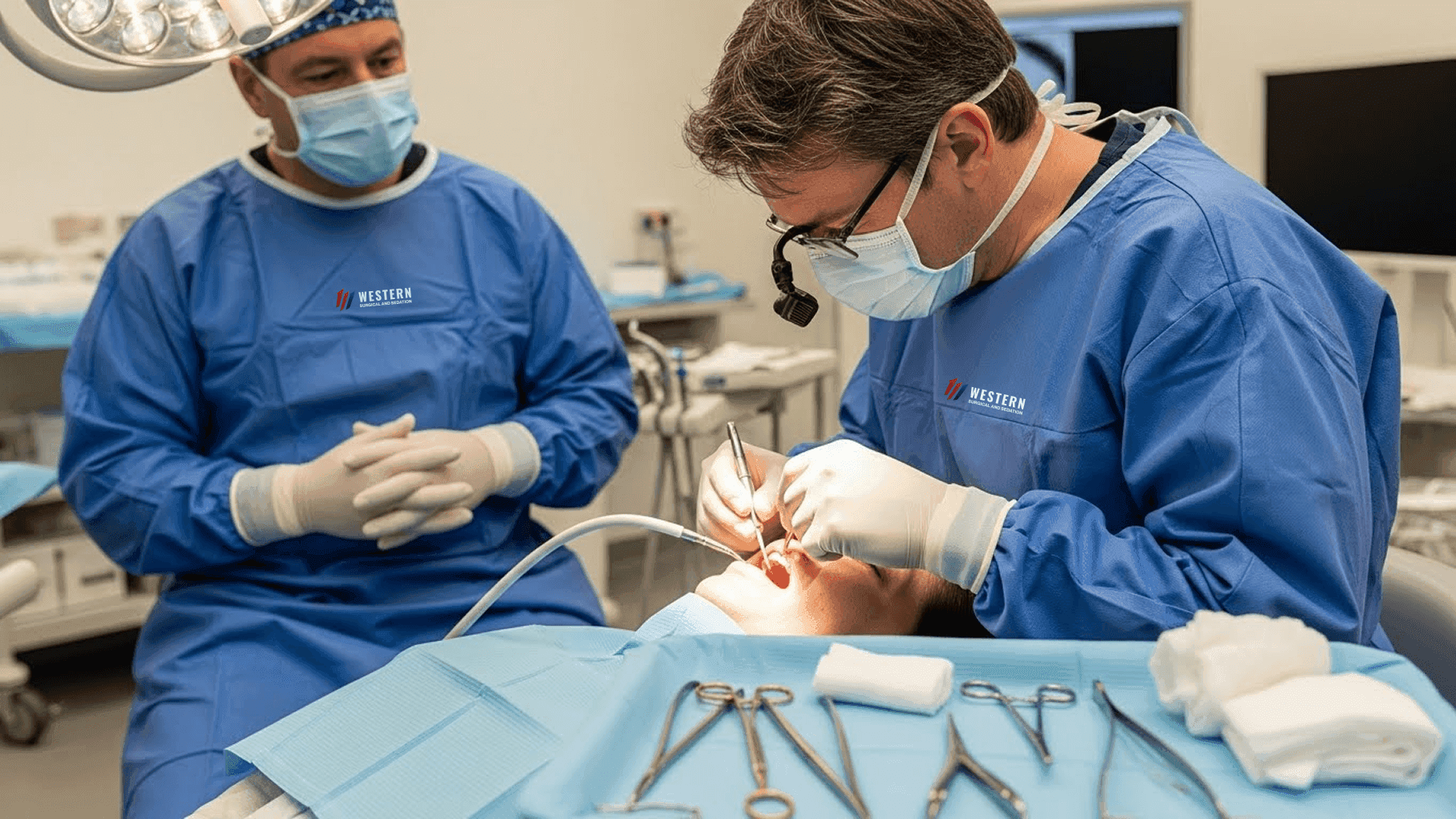
Ask most general dentists about wisdom teeth and you’ll hear a version of the same story. They were trained to refer. Third molars felt unpredictable — too variable, too risky, too close to the nerve. So every time a patient needed one out, they sent them somewhere else.
That instinct to refer isn’t wrong. But it’s often based on a deficit of training, not a deficit of ability. General dentists who receive proper surgical instruction consistently report that third molar extractions — including moderately impacted cases — become structured, manageable, and profitable procedures within months of dedicated training.
Here’s what that transition actually looks like.
Why Third Molars Feel Unpredictable — And Why That Changes With Training
The perception that wisdom teeth are inherently complex comes from a few real factors: variable angulation, proximity to the inferior alveolar nerve, inconsistent root morphology, and the limited access of the posterior mandible. These are legitimate anatomical challenges. They’re also challenges that trained surgeons navigate every day using a systematic framework — not guesswork.
The difference between a dentist who finds these cases overwhelming and one who finds them routine is almost always the same thing: a structured approach to difficulty assessment, tissue management, and surgical sequencing. That framework can be taught. And once it’s internalized through repetition, it changes how every case feels.
Difficulty Assessment: The First Skill That Changes Everything
Before a dentist can manage complexity, they need to accurately recognize it. Most surgical training programs underemphasize this step — yet the ability to look at a periapical radiograph, identify the relevant anatomical landmarks, and correctly classify a case as straightforward, moderately complex, or high-risk is what makes everything else possible.
Key factors in third molar difficulty assessment include:
Angulation: mesioangular, distal, horizontal, and vertical impactions each carry different biomechanical demands
Root morphology: fused, dilacerated, or hypercementosed roots require different sectioning and elevation strategies
Depth of impaction: soft tissue vs. partial bony vs. full bony impactions have meaningfully different surgical approaches
Proximity to the inferior alveolar nerve: Pell-Gregory classification and Winter’s lines remain reliable tools for risk stratification
Bone density and patient age: younger patients with softer bone are generally more forgiving; older patients with denser bone require more precise technique
Learning to read these factors correctly — before picking up an elevator — is the foundation of safe third molar surgery.
Surgical Technique: What Hands-On Training Actually Teaches
Didactic education covers anatomy. Live training teaches technique. There is no substitute for performing actual procedures under expert supervision when it comes to the procedural skills third molar surgery demands.
The core technical elements trained dentists develop include:
Flap design and tissue management.
A poorly designed flap creates unnecessary tension, limits access, and increases healing time. Proper envelope and triangular flap design gives the surgeon the visibility and room needed to work efficiently. This is a skill that develops through doing — not watching.
Bur selection and bone removal.
Knowing when to use a round bur versus a fissure bur, how much bone to remove, and how to create purchase points without compromising adjacent structures comes from supervised repetition. Overtly aggressive bone removal is one of the most common errors in untrained practitioners.
Sectioning strategy.
Most impacted third molars benefit from tooth sectioning before elevation. The angle and depth of the sectioning cut directly affects how cleanly the tooth separates and how much force is required for removal. This judgment develops through guided practice on real cases, not models.
Wound closure and postoperative planning.
Proper suture technique, irrigation, and postoperative instructions affect both healing outcomes and patient satisfaction. These steps are often rushed in busy practices — training ensures they become consistent habits.
The Role of Repetition in Building Surgical Confidence
Confidence in third molar surgery is not a mindset shift. It is a clinical outcome that emerges from accumulated, well-guided repetition. The more cases a dentist performs with expert feedback, the more predictable each subsequent case becomes — not because the anatomy changes, but because the surgeon’s pattern recognition and manual fluency improve.
This is why training programs that include live patient procedures produce meaningfully different results than those that rely on simulation or observation. Reading about flap design is not the same as designing a flap. Watching an elevation is not the same as developing the tactile sense required to manage resistance without applying excessive force.
At Western Surgical and Sedation, the progression is deliberate: dentists begin with simpler erupted and soft tissue cases and advance toward partial bony and bony impactions as their technique and assessment skills develop. Each step is supervised and debriefed. The goal isn’t speed — it’s the kind of calm, systematic competence that holds under real clinical conditions.
What Keeping Third Molars In-House Actually Means for a Practice
The revenue case is straightforward. A general dentist who refers all third molars is giving away a significant portion of their potential production. A single third molar extraction typically generates between $300 and $600 per tooth — and many patients require all four. A dentist performing five or six of these cases per week is adding a meaningful revenue stream without adding new patient acquisition costs.
But the case for keeping these procedures in-house goes beyond revenue. Patients who trust their general dentist for routine care prefer to stay with someone they know for surgical procedures. Every referral to an oral surgeon is a potential relationship interruption — and occasionally a permanent one. Dentists who can offer a complete scope of care build deeper patient retention and stronger word-of-mouth reputations.
The training investment is modest compared to the long-term return. Dentists who complete Western Surgical and Sedation’s program routinely recover that investment within the first few months of implementing the procedures.
Is Third Molar Training Right for You?
If you’re a general dentist who currently refers all or most wisdom tooth cases, the question isn’t whether you’re capable of learning this. Most general dentists have the manual dexterity and clinical judgment required. The question is whether you have the right training framework to develop these skills safely and efficiently.
Western Surgical and Sedation offers exactly that: live, in-person hands-on training with real patients, one-on-one mentorship from a clinician who has removed over 300,000 teeth, and a structured progression that takes you from basic extractions to complex impactions at a pace that builds genuine confidence.
Stop referring cases you could be keeping. The training exists. The pathway is clear.
Frequently Asked Questions
Can a general dentist perform third molar extractions?
Yes. General dentists are legally permitted to perform wisdom tooth extractions in all U.S. states. With proper surgical training — including live patient experience and hands-on mentorship — many general dentists perform routine and moderately impacted third molar cases safely and effectively.
What makes a wisdom tooth extraction difficult?
Key difficulty factors include the tooth’s angulation (mesioangular, distal, horizontal, or vertical), depth of impaction (soft tissue vs. partial bony vs. full bony), root morphology, proximity to the inferior alveolar nerve, and the patient’s age and bone density. A trained dentist can assess these factors from a periapical radiograph before beginning any procedure.
How long does it take to learn third molar extractions as a general dentist?
With structured, hands-on training and supervised repetition, most general dentists develop competence in routine extractions and moderately impacted cases within a few months of active practice. The learning curve is significantly shorter when training includes live patient procedures with expert mentorship rather than lectures alone.
What is the Pell-Gregory classification for wisdom teeth?
The Pell-Gregory classification is a widely used system for assessing the difficulty of mandibular third molar extractions based on the tooth’s depth relative to the adjacent second molar (Class A, B, or C) and its relationship to the ramus of the mandible (Class I, II, or III). It helps dentists and oral surgeons predict surgical complexity and plan the appropriate approach before incision.
How much do wisdom tooth extractions pay in a general dental practice?
Fees vary by region and complexity, but a single third molar extraction typically generates $300 to $600 in production. A dentist performing five to six cases per week adds a significant revenue stream without additional patient acquisition costs — and without the referral loss that comes with sending cases out.

Related Articles
Related reading
Explore articles connected to surgical training, IV moderate sedation, and real world clinical decision making, selected to support dentists applying advanced care in daily practice.