Most continuing education courses end the moment you walk out the door. You sit through a lecture, watch a demonstration, maybe practice on a model — and then you go back to your practice alone and wonder why the first real case feels nothing like what you trained for.
That gap between classroom instruction and clinical reality is exactly where mentorship changes everything.
Why Mentorship Matters More Than Coursework Alone
General dentists who want to expand into wisdom teeth extractions or in-office IV sedation face a learning curve that didactic education alone simply cannot flatten. Reading about flap design is not the same as performing it under pressure. Watching a sedation titration on video is not the same as managing a real patient’s airway response in your own operatory.
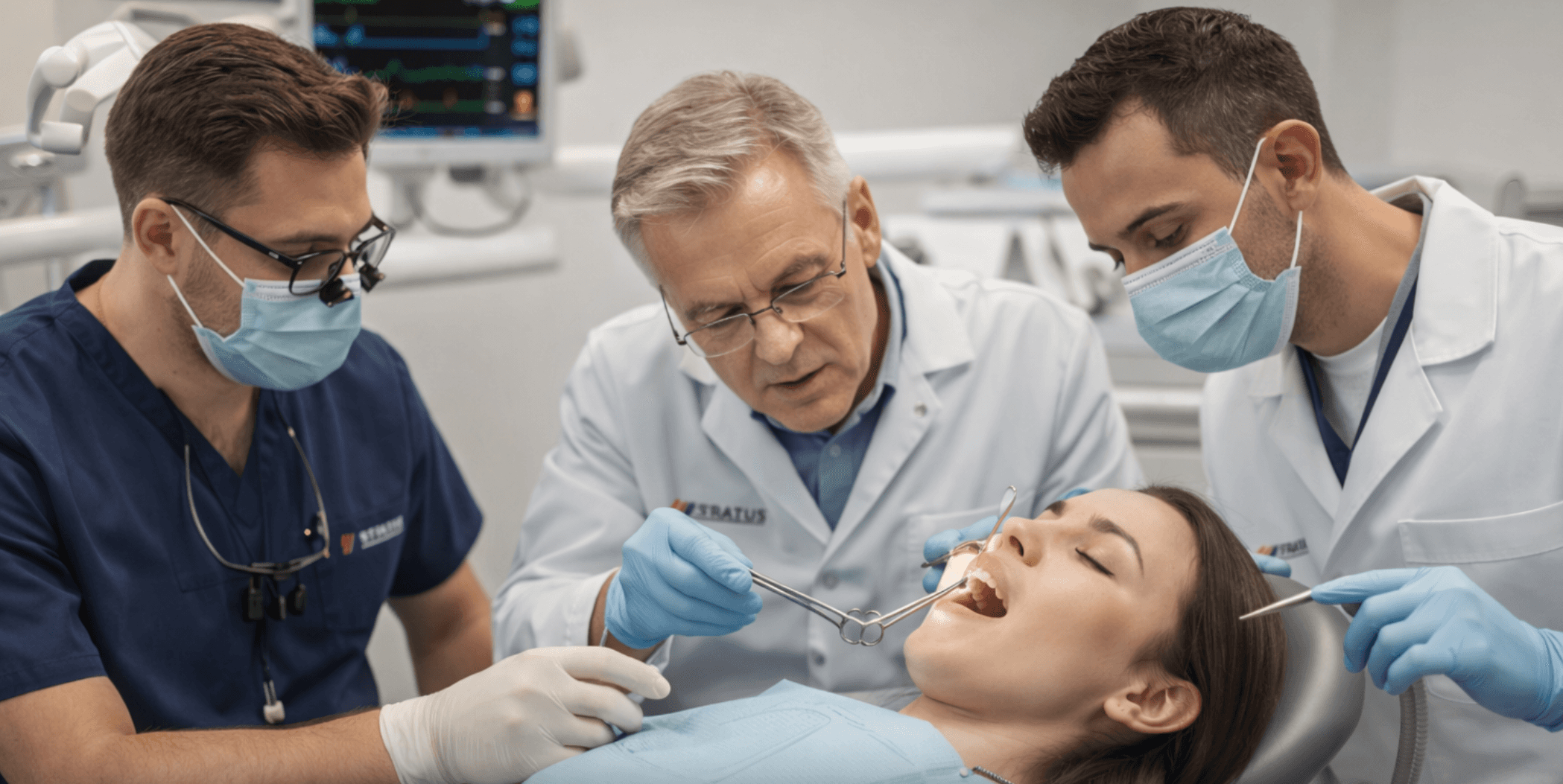
Mentorship bridges that gap by placing an experienced clinician directly alongside you — not in a controlled training environment, but in the real-world conditions you’ll face every day.
Research and practitioner experience consistently show that dentists who receive structured mentorship after formal training implement advanced procedures faster, more safely, and with significantly greater confidence than those who train without follow-up support. The difference isn’t knowledge — it’s accountability and live feedback during the moments that count.
What Real One-on-One Dental Mentorship Looks Like
Not all mentorship is created equal. There is a meaningful difference between a program that offers access to an instructor via email and one that provides structured, case-by-case guidance as you integrate new procedures into your practice.
Effective dental surgical mentorship includes:
Direct case feedback.
A mentor who reviews your actual cases — your radiographs, your technique choices, your outcomes — and provides specific, actionable input rather than generic encouragement.
Real-time support during early procedures.
The first time you manage a partially impacted third molar without referring out, having a trusted resource available changes both your outcome and your anxiety level. That support is worth more than another lecture.
Systematic progression.
Good mentorship doesn’t throw you into complex bony impactions on day one. It starts with straightforward cases, builds your confidence through repetition, and advances you toward more challenging clinical scenarios as your skills develop — similar to how surgical residency programs are structured, without requiring you to go back to school.
Honest assessment.
A mentor who tells you the truth about your technique, your patient selection criteria, and the areas where you need more repetition is more valuable than one who validates everything you do.
The Connection Between Mentorship and Clinical Confidence
Confidence in surgical dentistry is not a personality trait. It is a clinical outcome — one that develops when a dentist has performed enough repetitions, received enough feedback, and been supported through enough uncertainty to trust their own hands.
Without mentorship, that development is slow, uneven, and often derailed by one bad outcome that could have been prevented with better guidance. With it, general dentists routinely report that procedures they once referred automatically — third molar extractions, complex impactions, IV sedation cases — become a normal, profitable, and genuinely satisfying part of their practice within months.
The data from dentists who complete mentorship-supported training programs is consistent: they keep more procedures in-house, they produce more per patient, and they build the kind of clinical reputation that drives referrals back to them rather than away.
How Western Surgical and Sedation Integrates Mentorship into Every Program
At Western Surgical and Sedation, mentorship is not an add-on. It is the foundation of how we train general dentists in wisdom teeth extraction and in-office IV moderate sedation.
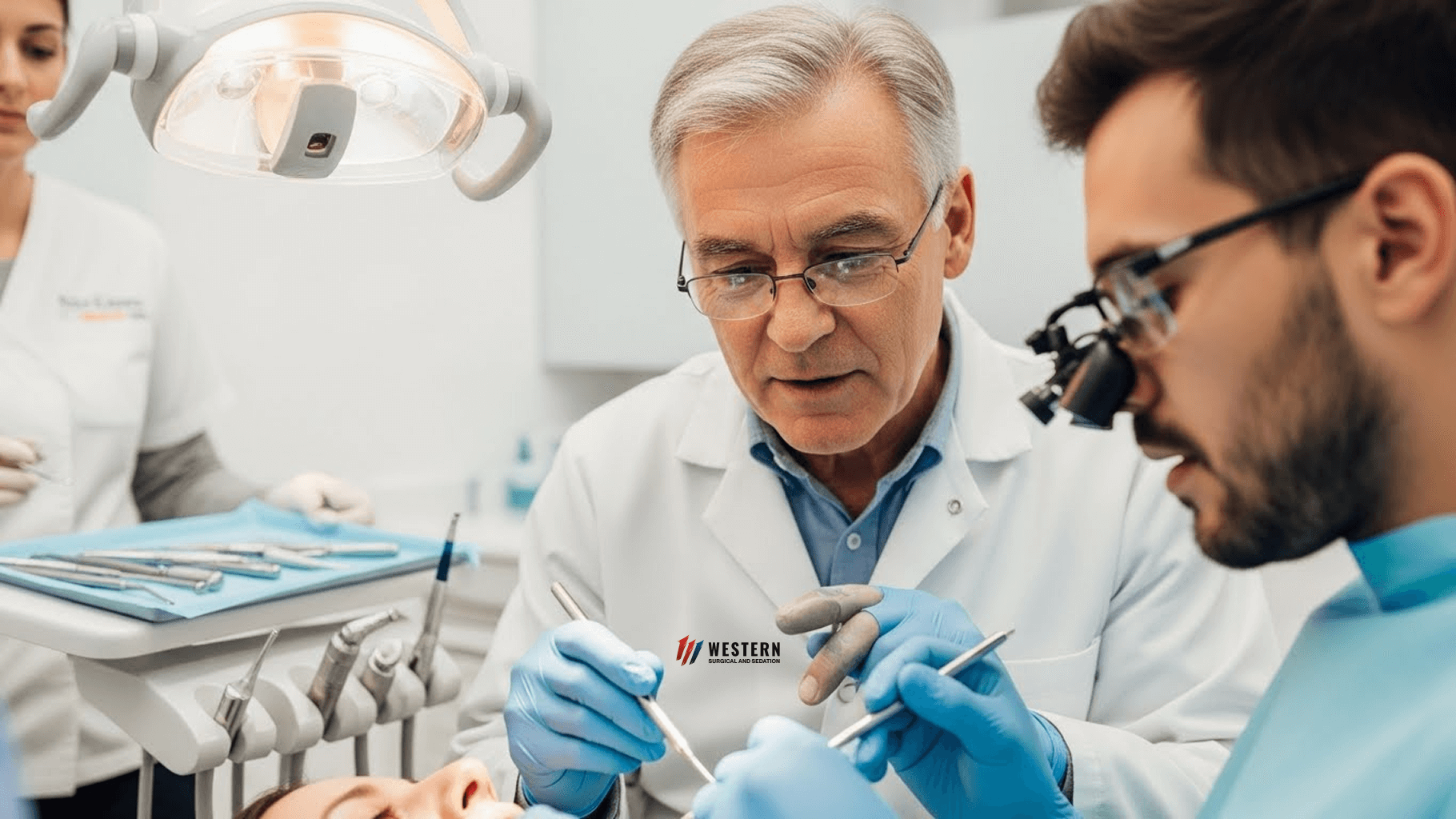
Dr. Heath Hendrickson has removed over 300,000 teeth and attended over 60,000 sedations — not as a specialist, but as a general dentist who built these skills through practice, precision, and the kind of real-world repetition that most CE programs never provide. He teaches the same way: hands-on, case-based, and alongside you — not in front of a screen.
Our training model combines:
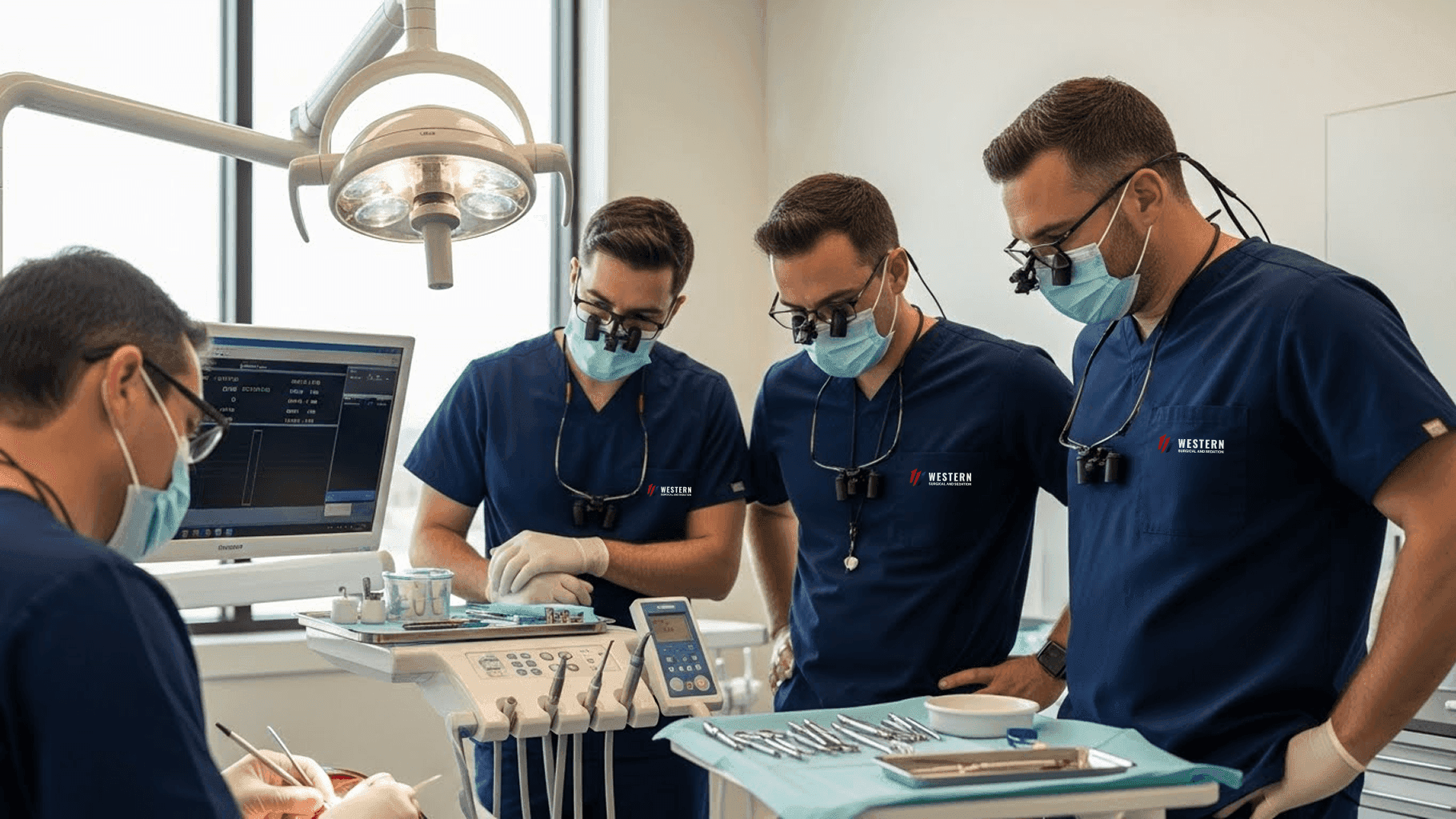
Live, in-person hands-on training with real patients in a clinical setting
One-on-one mentorship with Dr. Hendrickson throughout your learning progression
A continuum of online courses to support your development between live sessions
The goal isn’t just certification. It’s helping you walk back into your practice on Monday and actually use what you learned — confidently, safely, and profitably.
Is Mentorship the Missing Piece in Your Training?
If you’ve completed CE courses in the past and still hesitate to take on surgical cases, the problem probably isn’t your ability. It’s the absence of consistent, expert feedback during the phase where your skills needed to be reinforced.
Mentorship is what converts training into capability.
General dentists across the country are using the Western Surgical and Sedation model to stop referring cases they could perform themselves — and to start building the practice, the revenue, and the clinical identity they trained for.
Frequently Asked Questions
What is the difference between dental CE courses and dental mentorship programs?
CE courses deliver knowledge in a classroom or online setting. Mentorship programs provide ongoing, case-specific guidance from an experienced clinician as you implement those skills in your own practice — making the transition from training to real procedures faster and safer.
Do general dentists need mentorship to perform wisdom teeth extractions?
Not legally, but clinically it makes a significant difference. Dentists who receive mentorship support after surgical training report higher confidence, fewer complications, and faster case progression than those who train without follow-up guidance.
How does one-on-one dental mentorship work at Western Surgical and Sedation?
Dr. Hendrickson works directly alongside each dentist during live training and remains available for case-based support as graduates integrate procedures into their practice. It is not a group course — it is individualized, hands-on instruction with real patients.
Can a general dentist learn IV sedation through a mentorship-based program?
Yes. Western Surgical and Sedation’s IV sedation training is built around live patient experience and direct mentorship — the same model used to develop surgical confidence, applied to sedation protocols and airway management.
Related Articles
Related reading
Explore articles connected to surgical training, IV moderate sedation, and real world clinical decision making, selected to support dentists applying advanced care in daily practice.