
Turning Clinical Training Into Daily Practice: How General Dentists Successfully Implement Advanced Skills
Practice Integration
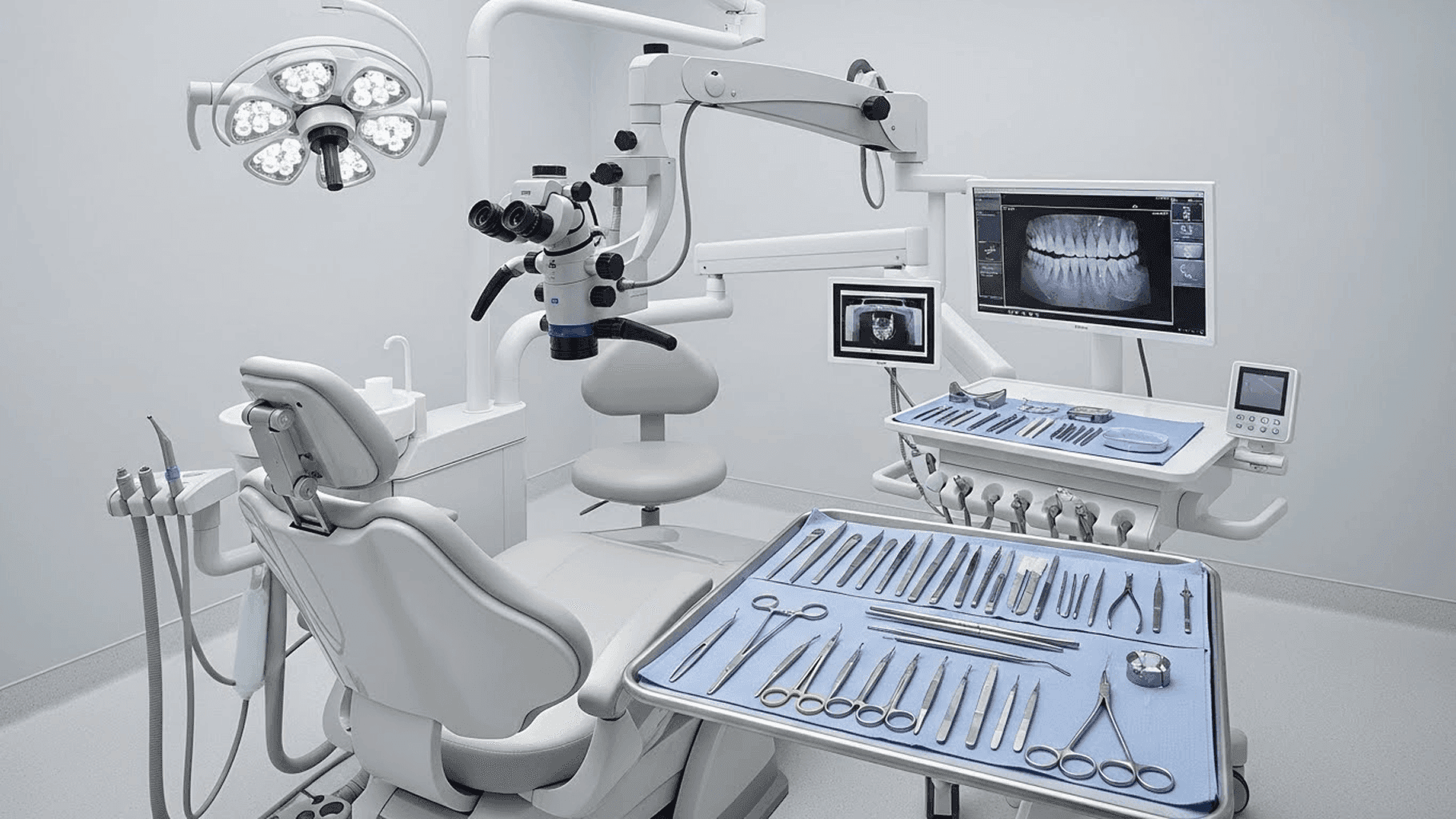
There is a well-documented gap in continuing dental education that almost no one talks about openly: the space between completing a training program and actually doing the procedure in your own practice.
Dentists who attend surgical or sedation courses come back energized. They have new knowledge, new frameworks, and genuine intention to expand their scope. Then Monday morning arrives. The schedule is full, the team is not prepared, the right instruments might not be on the tray, and the first patient who might benefit from the new skill is not quite the textbook case they trained on.
So the procedure gets referred. Again. And again. And over time, the training fades from active clinical use into something the dentist completed but never fully deployed.
This is not a knowledge problem. It is an implementation problem. And it is one of the most common and least discussed challenges in advanced dental education. Here is how to solve it.
Why the Implementation Gap Exists
Most CE programs are designed to get dentists through the training itself. Very few are designed with the same rigor around what happens when the dentist returns to their practice. The assumption is that a competent clinician who has completed the course will figure out the rest.
That assumption ignores several real obstacles that consistently prevent implementation:
No clear starting point.
After training, many dentists are uncertain which cases to start with. They know the technique in principle but lack a framework for selecting the right first few patients — cases conservative enough to build confidence without being so simple they don’t translate to real clinical learning.
Team unpreparedness.
Adding surgical extractions or IV sedation to a practice is not just a clinical decision — it requires a coordinated team. The dental assistant needs to know instrument sequencing. The front desk needs to know how to schedule and present these procedures. If the team is not trained alongside the dentist, the workflow breaks down the first time a case is attempted.
Equipment and supply gaps.
Performing a third molar extraction or IV sedation requires specific instruments and supplies that may not already be in the practice. Discovering a gap on the day of a procedure — a missing elevator, the wrong gauge IV catheter — is demoralizing and can permanently set back a dentist’s confidence.
No post-training support.
The first few cases after any new training carry a disproportionate amount of psychological weight. One challenging outcome — even a manageable one — can cause a dentist to stop entirely if there is no mentor to debrief with, no framework for evaluating what happened, and no guidance on how to adjust for the next case.
The Framework for Successful Implementation
Dentists who successfully integrate advanced surgical and sedation skills into daily practice share a common pattern. They do not just complete training — they build the conditions for implementation before the first case. Here is what that looks like in practice.
Start with patient selection criteria, not a full rollout.
The first goal is not to offer the new procedure to every eligible patient. It is to identify two or three appropriate starting cases — patients with straightforward presentations, low medical complexity, and high likelihood of a smooth outcome. These first cases build the clinical memory and procedural fluency that make everything else possible. Criteria for initial case selection should be discussed with a mentor before returning to practice, not determined on the fly.
Prepare the team in parallel with clinical training.
If the dental assistant does not know the instrument sequence for a third molar extraction, the procedure will be longer, more stressful, and more error-prone than it needs to be. Before the first case, walk the entire clinical team through the procedure: what instruments are needed, in what order, what they should anticipate at each stage, and how to set up the tray correctly. A well-prepared assistant makes the dentist look — and perform — significantly better.
Audit and complete your supply inventory before the first case.
Make a specific list of every instrument and supply required for the procedures you are adding. Cross-reference it against your current inventory. Order what is missing. Do not wait until the day before the first case to discover gaps. Western Surgical and Sedation provides graduates with a detailed supply list as part of the training program — use it as a checklist before scheduling the first patient.
Schedule deliberately, not opportunistically.
The first several cases should be scheduled with adequate time, ideally at a lower-stress point in the day or week. Do not slot the first surgical extraction between two full hygiene exams with a 20-minute buffer. Give yourself room to work methodically, debrief the case afterward, and build the team’s familiarity with the new workflow. As the cases become routine, tighter scheduling becomes appropriate.
Maintain access to post-training mentorship.
The difference between dentists who successfully implement new skills and those who do not is almost always the presence or absence of a trusted resource to consult when early cases raise questions. This does not need to be a formal arrangement for every case — but knowing that a specific, experienced clinician is available to review a radiograph, talk through a challenging presentation, or debrief an unexpected outcome is what keeps early momentum from collapsing under the weight of a single difficult case.
How Western Surgical and Sedation Supports Implementation, Not Just Training
The design of our training program reflects a direct response to the implementation gap. We do not consider a dentist’s education complete at the end of the live training event. The goal is a dentist who returns to practice and actually uses what they learned — immediately, consistently, and with growing confidence.
That is why mentorship with Dr. Hendrickson extends beyond the training itself. Graduates have access to case-based guidance as they begin integrating procedures into their practices. When the first partially impacted molar presents and looks slightly more complex than expected, there is someone to call. When a sedation titration does not go quite as planned and the dentist wants to talk through the decision points, that conversation is available.
We also provide practical implementation support: supply lists, case selection frameworks, team preparation guidance, and protocol templates that translate directly into clinical workflows. These are not afterthoughts. They are the infrastructure that turns a training experience into a durable practice capability.
The dentists who get the most from our program are the ones who treat implementation as seriously as they treat the training itself. They come prepared to learn. They leave prepared to do. And they stay connected to the mentorship that keeps their early momentum from stalling.
What Successful Implementation Actually Looks Like
Six months after completing training, a dentist who has implemented successfully looks like this: they are performing third molar extractions regularly, referring fewer cases than before, generating additional production from procedures they previously sent out, and doing it with a level of comfort that surprises them when they compare it to where they started.
The team is efficient. The setup is routine. The case selection criteria are internalized. The first few challenging outcomes — every clinician has them — have been processed and learned from rather than used as reasons to stop.
That outcome is not automatic. It requires deliberate preparation, the right support structure, and a willingness to treat the first month of implementation as an extension of training rather than independent practice. But for dentists who approach it that way, the integration of advanced skills into daily practice is not a distant aspiration. It is a straightforward, replicable process.
Western Surgical and Sedation exists to make that process as direct as possible.
Frequently Asked Questions
How do I start offering surgical extractions after completing a CE course?
Begin with patient selection, not a full rollout. Identify two or three straightforward cases — erupted or soft tissue impactions with low medical complexity — to build procedural fluency. Prepare your team in parallel, audit your instrument inventory before the first case, and schedule those initial appointments with generous time buffers. Post-training mentorship access significantly improves early implementation success.
How long does it take to integrate new dental procedures into a practice?
Most dentists who complete structured, hands-on training and actively pursue implementation are performing new procedures routinely within two to three months. The timeline depends on case volume, team preparation, and the availability of post-training support. Dentists with mentorship access consistently implement faster and with fewer setbacks than those without.
What does a dental team need to know before a dentist adds surgical procedures?
The dental assistant should be trained on instrument sequencing, tray setup, and what to anticipate at each stage of the procedure. The front desk team should understand how to schedule and present these procedures to patients, including time requirements and any special instructions. A brief team walkthrough before the first case reduces procedural friction significantly.
What supplies do I need to add third molar extractions to my practice?
Core instruments typically include a range of elevators (straight and angled), extraction forceps, a surgical handpiece and bur kit, retractors, irrigation setup, and suture materials. The specific list varies by the types of cases being performed. Western Surgical and Sedation provides graduates with a detailed supply checklist as part of the training program.
What if a case goes wrong after I start doing surgical extractions or sedation?
Every clinician encounters challenging outcomes during early implementation — this is a normal part of skill development, not a signal to stop. What matters is having a framework for debriefing the case, understanding what happened, and adjusting approach for subsequent patients. This is exactly where post-training mentorship is most valuable: a trusted, experienced clinician who can help you evaluate the outcome objectively and move forward with confidence.
Related Articles
Related reading
Explore articles connected to surgical training, IV moderate sedation, and real world clinical decision making, selected to support dentists applying advanced care in daily practice.